


For the most part, all efforts and thoughts are focused on the upcoming mayoral primary on June 22. However, slipping under the radar is the Manhattan district attorney’s race which is just as significant. Cy Vance, Jr. served as DA for a decade; his replacement will be just the third New York County DA since Robert Morgenthau’s election in 1975.
More on the 2021 city races: Eric Adams Is First Choice for mayor, Brian Benjamin First Choice for City Comptroller, and an explainer on Understanding Ranked Choice Voting, which New Yorkers will use citywide for the first time this election.

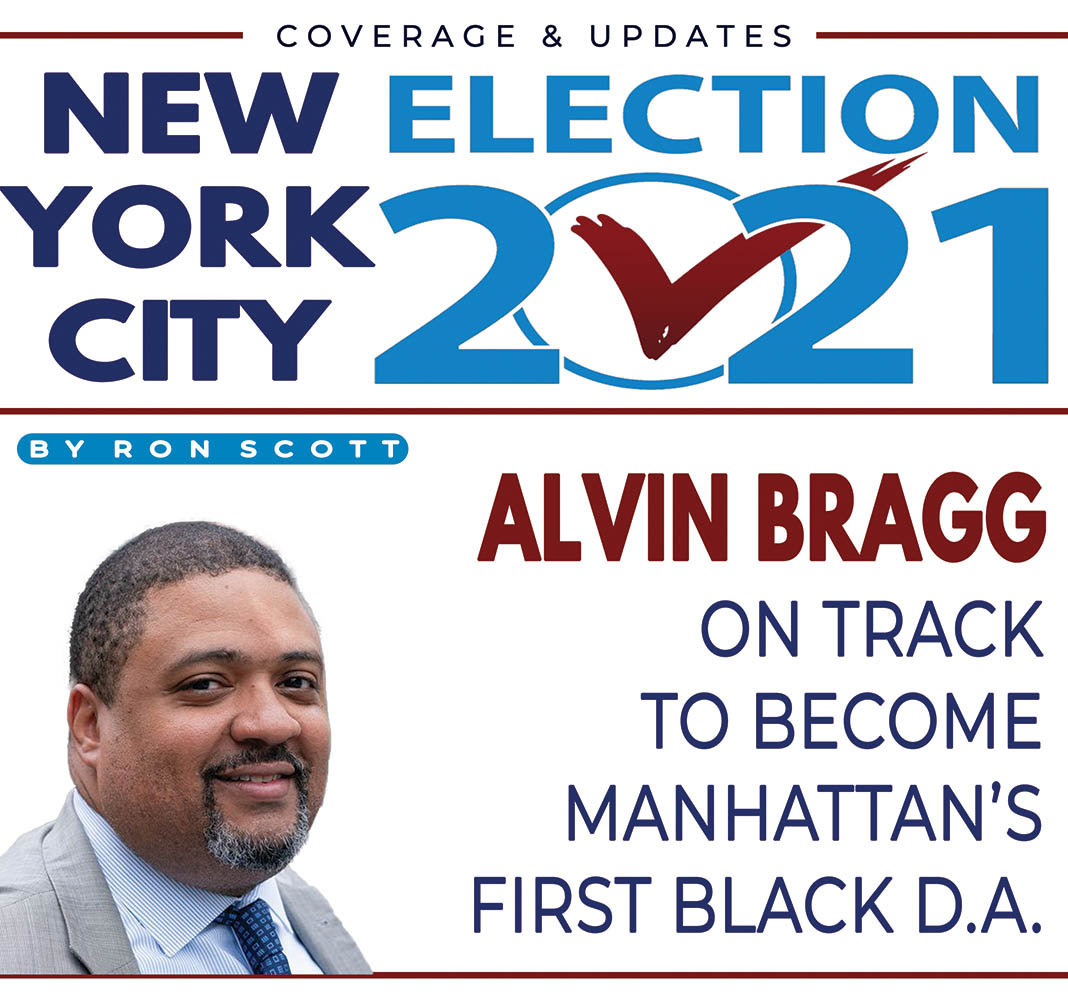
The intriguing aspect to this campaign is Alvin Bragg, the only Black candidate in the race. If elected, he would be Manhattan’s first Black district attorney. He would oversee the second-largest DA’s office in the country, responsible for a $169 million budget and team of 500 prosecutors. He would also take over a number of high-profile cases, including the criminal investigation into Donald Trump’s finances.
Bragg, born and raised in Harlem, is more than qualified: he’s an experienced prosecutor who headed up the New York State attorney general’s Office of Special Investigation, which prosecutes police misconduct. He has also successfully prosecuted corrupt politicians and has won significant settlement agreements in matters concerning discriminatory redlining, tenant harassment, and unlawful business practices.
A gun has been pointed at him six times in his life, three times by police officers and three times by civilians. He says such experiences can be labeled as secondary trauma. “Such traumatic experiences are passed on. Living in neighborhoods where people have to duck bullets or witness shootings is not a healthy environment. These are public health issues,” stated Bragg. “Getting guns off the street is better for safety and public health. We need to focus on what effects our safety and that is gun traffic. We have to stop the flow of guns in our neighborhoods, follow the money and contraband, and hold those people accountable.”
Bragg’s personal life experiences give him a complete understanding of the effects of gun violence and police brutality in Black and Brown communities. Throughout his career he’s been personally invested in criminal justice reform. “We must bring fundamental and systemic change – from judges to police to prosecutors to budget-setting legislators – and we need more independent objective reviews,” he said. He is in full support of President Biden’s George Floyd Justice in Policing Act “to change our laws governing these cases by making it clear that an officer can only use deadly force after the officer has exhausted all other options and has no reasonable alternative to the use of deadly force.”
Bragg stated the questions to ask of him are clear: is he going to make us safe, and what kinds of cases and decisions will make us safe in the city and our communities? Public safety and public health are rooted in our public institutions which will call for Bragg to be, among other things, proactive – which he has already demonstrated.

As New York City attempts to return to a place of normalcy as the COVID-19 pandemic loosens its horrific grip, one factor is apparent: mental health and community wellness is a key issue in Black and Brown communities.
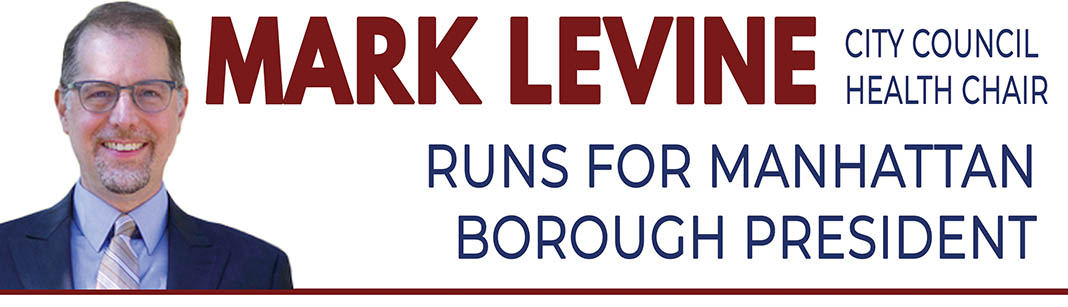
It is also important to acknowledge during this election period that a candidate’s experience and record speaks volumes. While there are many candidates to choose from, Mark Levine is one person to be considered in the upcoming election fray.
As chairman of the City Council Health Committee, with an overall budget of $2 billion, Levine was a leader in the fight against the COVID-19 pandemic. His health policy was based on science, focusing on the inequity of the COVID-19 vaccine dissemination and expanding it further into the most needed communities.
“In tackling the inequality of the health care system in NYC, it is important that every person has access to primary health care,” said Levine. “Community health clinics can play a role, as well as investing in public hospitals.”
Gun violence is also a public health crisis. “We need federal policies in place to help stop the transporting of guns and we have to do a better job in the city,” said Levine. “We have to be able to deescalate the violence before it gets out of hand.”
As a candidate for Manhattan Borough President, Levine advocates putting more funds into youth development for summer youth employment, mentoring programs and after school programs that would also include night basketball tournaments.
The city’s most important issue that has infected the entire country is police brutality. “I will fight for real accountability in the New York City Police Department,” noted Levine. “My goal is to do right by the city. We need more accountability in policing and disciplinary actions; racial targeting and excessive force must stop.” The full scope of both police brutality and gun violence must be a part of the overall conversation about mental health and community wellness.
Levine has created hundreds of units of affordable housing in his council district. He secured approval of the Morningside Heights Historic District, preserving 115 historic buildings. He has successfully fought to preserve affordable homeownership in New York City by protecting low-income coops.
He fought for improved bus service, more accessible subway stations, and streets which are safer for all – including pedestrians and bicyclists. He led revitalization of the City Council’s Jewish Caucus as chair of the group in his first term, and is a leader in the fight against anti-Semitism. He passed legislation creating New York City’s first-ever Office for the Prevention of Hate Crimes.
Levine has twice been elected to represent the 7th Council district, one of the most diverse in New York City, covering West Harlem/Hamilton Heights, Morningside Heights, and parts of the Upper West Side and Washington Heights. In an historic first for the nation, Levine defeated the landlord lobby to pass legislation guaranteeing a right to counsel for tenants facing eviction in New York City’s housing courts. This landmark policy has leveled the playing field for tenants and has already resulted in a significant decline in the number of families in New York City losing their homes because of evictions.