


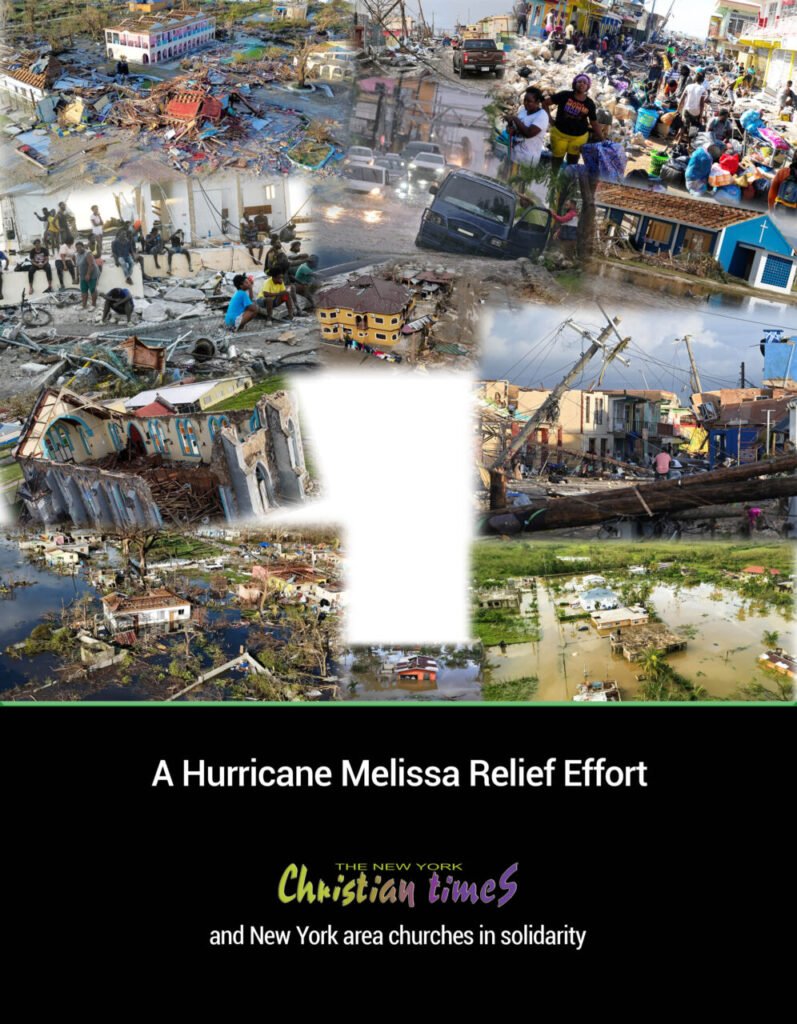
Hurricane Melissa made landfall as a catastrophic Category 5 storm – the first in Jamaica’s recorded history, leaving a trail of “heartbreaking” destruction that has been described as a “true humanitarian crisis.” The storm, which hit the island’s southern and western parishes on October 28, 2025, brought 185 mph winds, a 13-foot storm surge, and massive flooding from over 30 inches of rain in some areas.
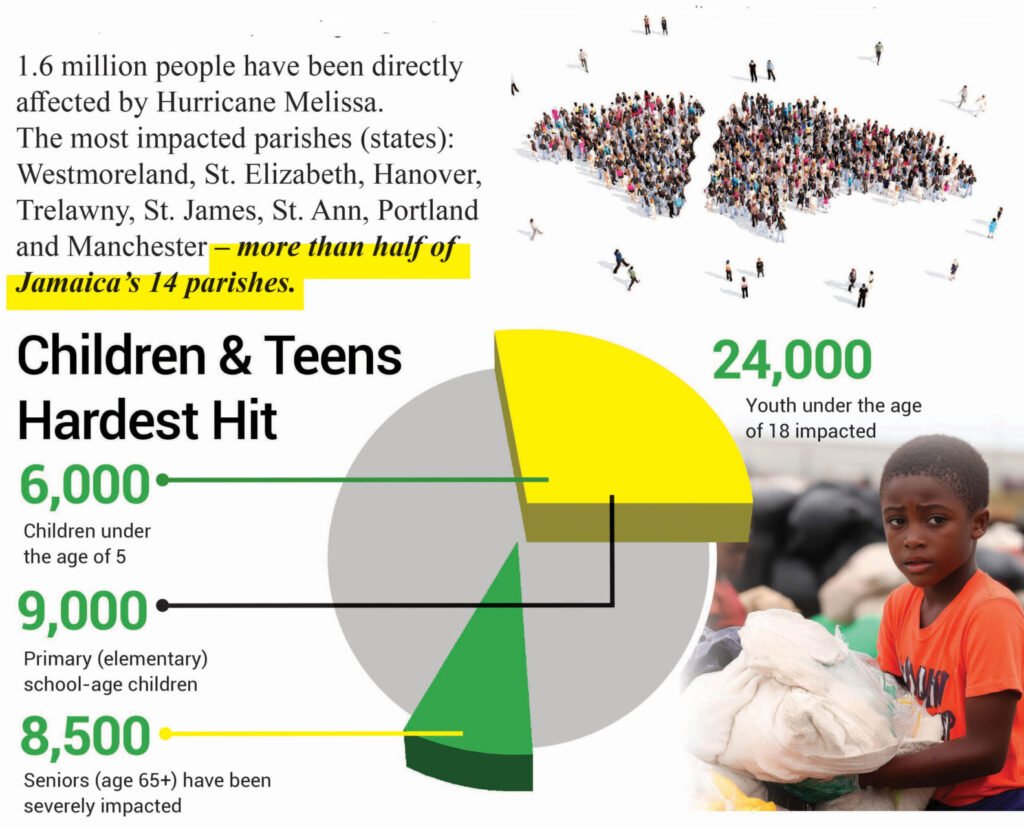
As of December 2025, the human toll includes at least 45 confirmed deaths and 15 people still missing as of November 11, with nearly 1.6 million people affected. Infrastructure damage is extensive; a high percentage of homes were destroyed, entire towns like Black River were wiped out, and an estimated 4.8 million tons of debris continue to block roads. Widespread power outages persisted for weeks, and many communities remained cut off, hampering relief efforts.

Houses, Churches and Property Damage
Hurricane Melissa struck Jamaica with fierce winds and heavy rain, leaving behind a trail of destruction that affected countless lives. The impact of this storm was not just about the buildings; it was about the people who lost their homes and the communities that face hardship. The devastation caused by Hurricane Melissa highlights the urgent need for support and assistance for those affected.
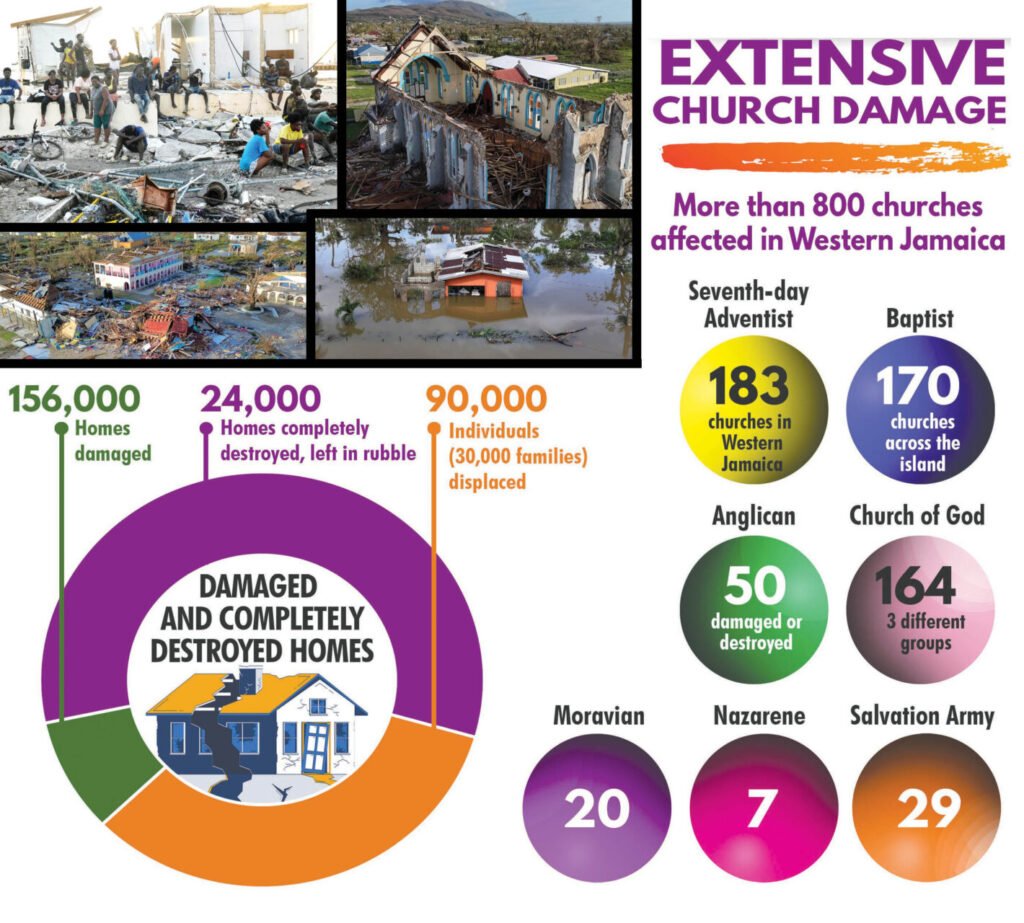
The storm damaged over 156,000 homes, forcing many families to seek shelter elsewhere. These displaced individuals face a harsh reality as they struggle to find basic necessities like food and clean water. The government and local organizations have stepped in to provide aid, but the need for help remains overwhelming. For instance, community centers serve as temporary housing for families, but these places are often overcrowded and lack proper resources.
Hurricane Melissa also caused significant destruction to churches and houses of worship, which are vital for community support and healing. Many people turn to their faith during this challenging time, seeking comfort and hope. However, with places of worship damaged, the community’s spirit has been tested. Local leaders are working hard to rebuild these spaces, but additional resources are essential for a swift recovery.
Schools and hospitals suffered damage as well, impacting education and healthcare. Some schools were forced to close, disrupting the learning process for thousands of students. Hospitals face challenges in providing care, as they deal with damaged facilities and increased patient needs. The urgency to repair these institutions is critical as they play a central role in rebuilding the community.
Hurricane Melissa brought severe property damage to Jamaica, affecting homes, churches, schools, and hospitals. The struggle for those displaced is far from over, and support is crucial for recovery. Helping to rebuild homes and restore community spaces will not only aid in physical recovery but also foster hope for a brighter future. The time to act is now, as we work together with Jamaica to heal and rise from the storm.

SOURCE: The New York Christian Times sources data from a broad diversity of credible outlets in order to arrive at the most accurate numbers. Because the exact figures vary from different sources, The Christian Times checks and crosschecks all data to arrive at the best conclusion, always with a small margin of error. Most numbers are rounded. Among our diverse sources are: AP Newswire, Reuters, The World Bank, ABC News, visitjamaica.com, Wikipedia.org, jbu.church, adventistyearbook.org, Nazarene.org/news, and unocha.org.
See also: Jamaica’s remarkable church density, and how its congregations are rebuilding after the storm.