

This is Part 1 of our Notable Women in Faith series. Continue with Notable Women In Faith: Present.
FRANCES JANE CROSBY

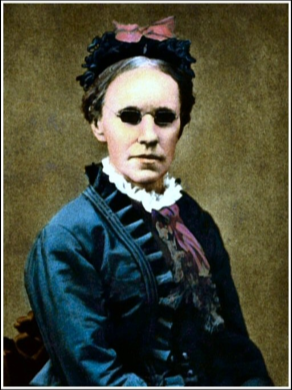
“Pass Me Not”, “Blessed Assurance”, and “To God Be the Glory” are among the more than 800 hymns penned by America’s most prolific hymnist of the nineteenth century. Despite becoming blind soon after her birth, Crosby was a great influencer in global church music and America’s poetry. She wrote the first secular cantata by an American composer and was also the author of more than 1,000 secular poems using more than 200 pseudonyms.
A popular public speaker and preacher, Ms. Crosby was born in 1820 in Brewster, New York. She would attend the John Street Methodist Church in lower Manhattan with her mother and grandmother, and later as an adult attended Sixth Avenue Bible Baptist, Plymouth Church and the Dutch Reformed Church in Brooklyn.
Crosby was an advocate for education for the blind and was herself a teacher at New York Institute for the Blind. She has appeared before Congress on many occasions. The dynamic Fanny Crosby had memorized most of the Bible, was a singer and a soloist, and could play the piano, guitar and other musical instruments.
It was said of Crosby, “had it not been for her affliction, she might not have been so great an influencer and she certainly would not have had so great a memory. Crosby once wrote, “It seemed intended by the blessed providence of God that I should be blind all my life and I thank Him for the dispensation. If perfect earthly sight were offered to me now, I would not accept. When I get to heaven, the first face that shall gladden my sight will be that of my Savior.”
SOJOURNER TRUTH

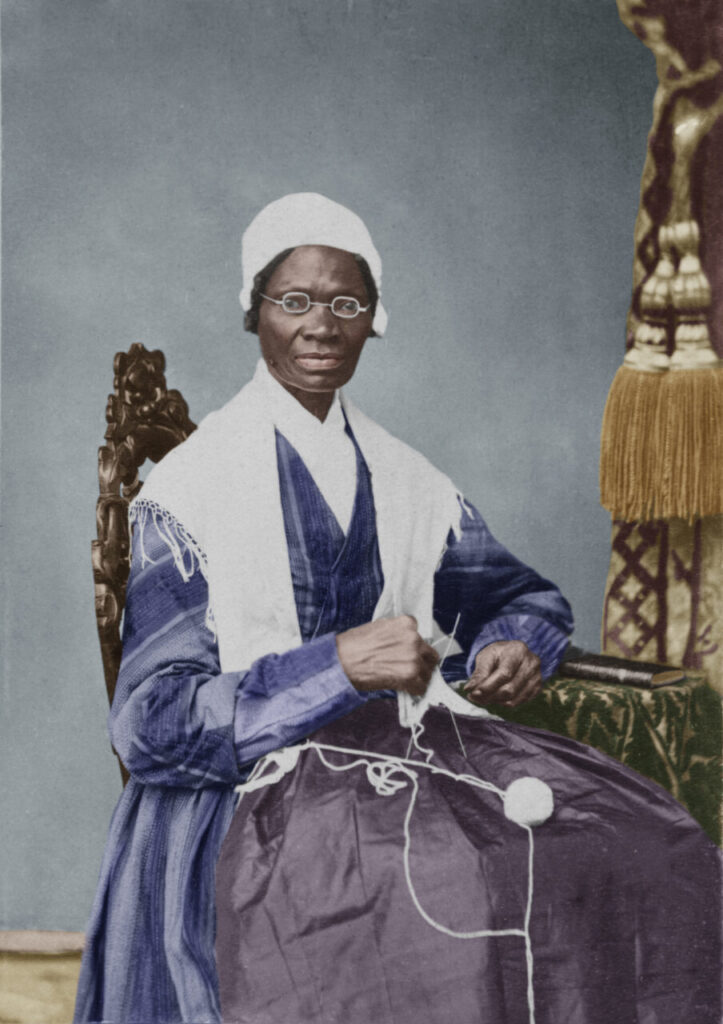
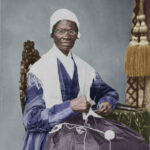
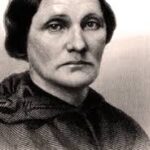
Six feet in height and of unmeasurable resilience, Isabella Baumfree – better known as Sojourner Truth – was a woman of strong faith and of firm conviction. Truth was born into slavery in a hamlet in New York State in 1789. She refused to be a slave and escaped with her baby daughter when she was 29 years old. She took her master to court to recover her enslaved son, and became the first Black woman to win a case against a White male.
Converted and convinced that she was called by God to preach, Sojourner Truth became a travelling evangelist whose practical message called for the freedom of Blacks and equal rights for women. Her exposure to ministry resulted from her work with a number of Christian ministers and evangelists and she changed her name in response to hearing God saying she should travel (Sojourner) and preach the truth (Truth). “The Spirit calls me, and I must go,” she told her friends, and her sojourn continued.
Truth travelled north and would soon meet William Miller, who preached that Jesus would appear in 1944. She began to attend the Millerite Adventist Camp Meeting. She became one of the preachers and singers, and would help to draw huge crowds. Christ did not come as forecasted and this resulted in what was called “The Great Disappointment.”
Sojourner Truth expanded her work as a prolific national speaker and writer in the abolition movement and the woman’s suffrage movement, and developed friendships and alliances with other key leaders like Harriet Beecher Stowe, Frederick Douglass, William Lloyd Garrison and Hannah Tracey Cutler.
She acquired several real estate properties but sold them and eventually moved to Battle Creek, Michigan and rejoined the former members of the Millerite Movement, now organized into what became the Seventh-day Adventist Church, as one of the founding members. Her activism continued and she worked with the abolitionists in Michigan, also helping to recruit Black troops for the Union Army.
This pioneer and trailblazer, who spoke before hundreds of audiences across the United States and had audiences with US presidents, not only helped to transform religion in America, but she impacted the abolition of slavery and boldly confronted the issue of women’s rights. Her extemporaneous speech “Ain’t I a Woman” is still one of America’s greatest oratory works.
AIMEE SEMPLE MCPHERSON

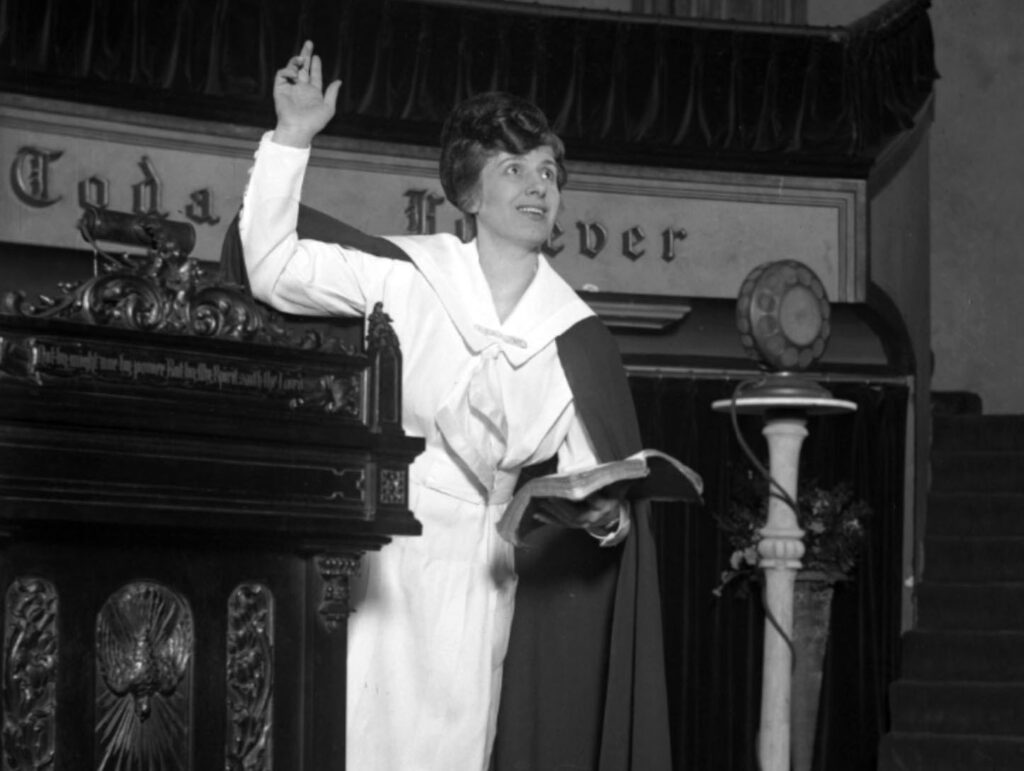
Rev. Aimee Semple McPherson is the epitome of a celebrity preacher. She built a megachurch before America had any, and at the height of her ministry, she was the most publicized preacher and evangelist in America.
Born in 1890 in Ontario, Canada, McPherson began her public profile when as a teenager she wrote a letter to the editor of a Canadian newspaper questioning the teaching of evolution with the use of taxpayers’ money. This was her first exposure to fame as people nationwide responded to her letter.
While attending a revival meeting in 1907, she met a Pentecostal evangelist visiting from Ireland. She was transformed by his message and soon dedicated her life to God. A year later, they were married. They studied the Bible together and soon moved to Chicago and joined Williams Durham’s Full Gospel Assembly. Semple contracted malaria and dysentery during their evangelistic tour to China, and he died in Hong Kong. Despite the loss of her husband, McPherson held evangelistic services and Bible classes on board the ship that was returning to the United States.
McPherson was solid in her conviction that she heard the voice of God calling her to preach. She travelled America and the world, and with her unique style of theatrical preaching, she assembled some of the largest crowds in America. Her ministry would go on to attract celebrities and politicians, including US presidents.
It was in 1918 that McPherson moved to Los Angeles. Her ministry rented the 3500-seat Philharmonic Auditorium, and despite its size, crowds would wait for hours to get into the auditorium. She would eventually build America’s largest domed church named Angelus Temple. As an outgrowth, the church became the headquarters for what we now know as Foursquare Church, a global denomination with more than 8 million members and churches across the globe.
Aimee Semple McPherson died in a hotel room in Oakland, California in 1944 during a series of revivals. She was found by her son, who went on to lead the organization for the next 44 years.
ANNE HUTCHINSON

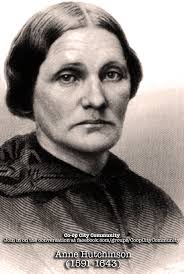
A spiritual advisor and religious reformer, Anne Hutchinson was an important voice in helping to shape the establishment of the church movement as the Puritans and Anglicans arrived in New England from England. Hutchinson, who was a prominent voice and speaker, held meetings and hosted large groups in her home, advocating God’s covenant of grace over works. This created what was hugely known as the Antinomian Controversy. Hutchinson claimed to possess direct revelations from God and prophesied ruin upon the new English colony. She was charged with contempt and sedition, and banished from the colony.
The bold and resilient Anne Hutchinson remained steadfast even after her excommunication from the church, which at the times was directly linked to the colony. She left and settled in Rhode Island, and eventually continued her journey to New Netherland (the North Bronx), where she presumably bought land and hired a builder to build a house for her family.
Unaware of the tension between the colonial settlers and the Indians, and moving on the strength of her favorable relationship with the Indians in Rhode Island, the Hutchinsons (a family of about 16) began to settle in but soon thereafter they were killed by the Indians in one clean sweep during a series of battles with the Dutch settlers called the Kieft’s War.
“She was a woman of ready wit and bold spirit. Her ordinary talk was about the things of the kingdom of God, and her usual conversation was in the ways of righteousness and kindness,” said John Winthrop, the first governor of the Massachusetts Bay Colony.
The Hutchinson River and the Hutchinson River Parkway were named in her honor.
ELLEN G. WHITE

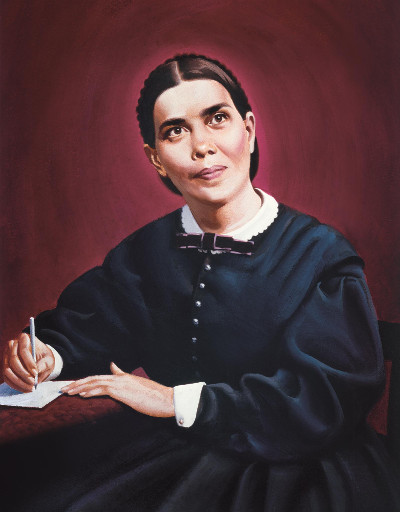
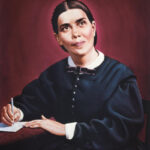
This Christian pioneer is highly regarded for her extensive writings and is noted as one of the key founders of what is now the Seventh-day Adventist Church.
E. G. White was born in Maine in 1827 and died in the North Bay region of San Francisco in 1915. Considered a leading figure in biblical prophecy, vegetarianism and education, White has been a strong advocate on key subjects on Christian life and lifestyle
.
Ellen White was a fervent and prolific writer who authored more than 40 books and some 5,000 articles, published in more than 140 languages. Most of her works are still in circulation and her book Steps to Christ has sold more than 70 million copies worldwide. According to her biographer, E. G. White is the most translated female non-fiction author in the history of literature, and the most translated American non-fiction author regardless of gender. Smithsonian magazine named her among the “100 most significant Americans of all time” and religion historian Randall Herbert Balmer described her as one of the most colorful and important figures in the history of religion in America.
White came to know Christ at the tender age of 12 and credits a misfortune for her conversion. Her family would soon join the Millerite Movement, and after “The Great Disappointment,” Ellen claimed to have received dreams and visions from God. Along with her husband and others, they formed a movement that became the Seventh-day Adventist Church. Today, there are over 160,000 churches and satellites with membership of more than 22 million. Additionally, the organization operates 211 hospitals and medical centers with more than 400 clinics, some 9,000 schools worldwide, and over 350,000 active employees and ordained ministers.
This trailblazing American woman was indeed a pioneer who promoted and advocated health and nutrition, creationism, publishing, biblical prophecy, evangelism, Christian living and the theology of the Seventh-day Adventist Church. She helped to establish schools and medical centers all over the world including Andrews University in Michigan and Loma Linda University and Medical Center
JENNIE SEYMOUR

Even before the greatest Pentecostal revival in America started on Azusa Street in Los Angeles, Jennie Evans Moore Seymour felt the call of God for ministry, and is reported to be the first woman in California to speak in tongues.
She was born in Austin, Texas in 1874 but later moved to Los Angeles to find work. She became a cook, working for an influential White family. During this time, she lived at 217 North Bonnie Brae Street, almost directly across the street from where William J. Seymour started what became the Azusa Street Revival.
Jennie attended the meetings regularly and soon received a vision in which she was speaking 6 languages, including Spanish, French and Greek.
On April 6, 1906, the year the revival broke forth, believers were swept to their knees as William Seymour prayed. Jennie fell to the floor and immediately began speaking in all six languages she saw in her vision, and each message was interpreted in English, marveling everyone. Immediately following this, Jenni, who had never played the piano, went to the instrument and began to pay quite skillfully while singing. The Revival of Azusa Street continued and 2 years later, William Seymour married Jennie, who continued to play the piano for services.
She was an evangelist, a city missionary, and a worship leader, and was a tremendous influence in the evolution of the holiness and Pentecostal movements. After the death of her husband in 1922, Evangelist Jennie Seymour continued as pastor of the Azusa Street congregation until her health deteriorated. She died in 1936.
Most major Pentecostal denominations grew out of or were influenced by the Azusa Street movement and Wililam and Jennie Seymour. This includes Church of God in Christ, Assemblies of God, Church of God, and United Pentecostal Church. Today, there are over 500 million Pentecostals in the world.
Jennie’s home on Bonnie Brae Street was converted to a museum and the piano she played under the Spirit’s anointing is still there.
MARY BAKER EDDY

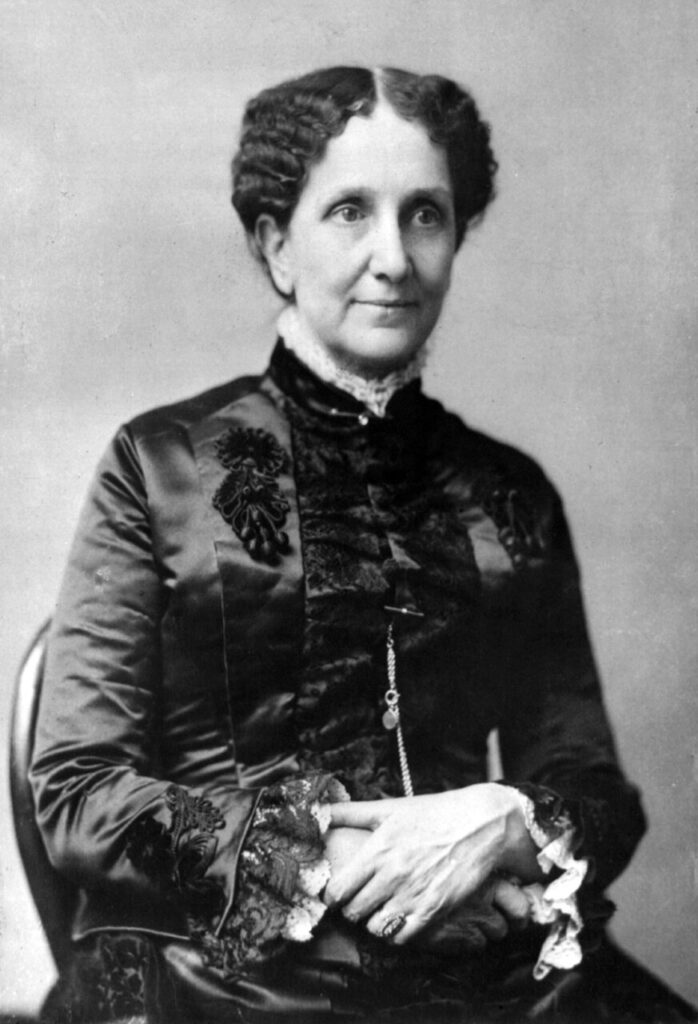
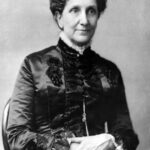
Mary Baker Eddy had an enduring life that started on July 16, 1821 in New Hampshire. Mother of the Christian Science movement, Eddy is the author of several books and articles, and is the lead pioneer of The Church of Christ, Scientist, founded in 1879 in Boston, Massachusetts.
Mary struggled with ill health as a child and later came to the realization that some of the difficult and unsettling church doctrines were impacting her health and wellbeing. As a teenager, she made her own decision for Christ and followed her mother’s advice to lean on God’s love and to seek Him and His guidance through prayer. That she did; and in her own words, “a glow of ineffable joy came over me.”
Her chronic indigestion and the pain and fevers were gone, and she felt her health restored to normal. This was for her the discovery of Christian Science that formed her lifelong passion and search for divine remedies to mankind’s sufferings. Now armed with a longing and thirst for divine things, Mary Baker sought diligently for the knowledge and power of God as the one great and ever-present relief for human woes. She wrote, “I wandered through the dim mazes of material medicine ‘til I became weary of scientific guessing. I sought knowledge from different schools – allopathy, homeopathy, telepathy and hydropathy, but without receiving satisfaction.”
Mary Baker Eddy wrote the by-laws and the constitutional structure for The Church of Christ, Scientist and founded a college that taught Christianity and its element of healing. She went on to establish many key elements of the organization grounded by a key guide to the Christian Science beliefs in a book called “Science and Health with Keys to the Scriptures.” This book has sold over 12 million copies. She has made an indelible mark on the religious life in America.
Today there are over 1,100 Christian Science Reading Rooms in America, the weekly Christian Science Sentinel, and one of America’s most enduring daily publications, The Christian Science Monitor, a secular world-wide news publication that is the winner of more than 7 Pulitzer Prizes, Peabody Awards and Global Press Club Awards.
The Smithsonian Magazine listed her among the 100 most significant Americans of all times, and following her death in 1910, The Boston Globe wrote that “she did a wonder and extraordinary work in the world and there is no doubt that she was a powerful influence for good.”
ANTOINETTE BROWN BLACKWELL

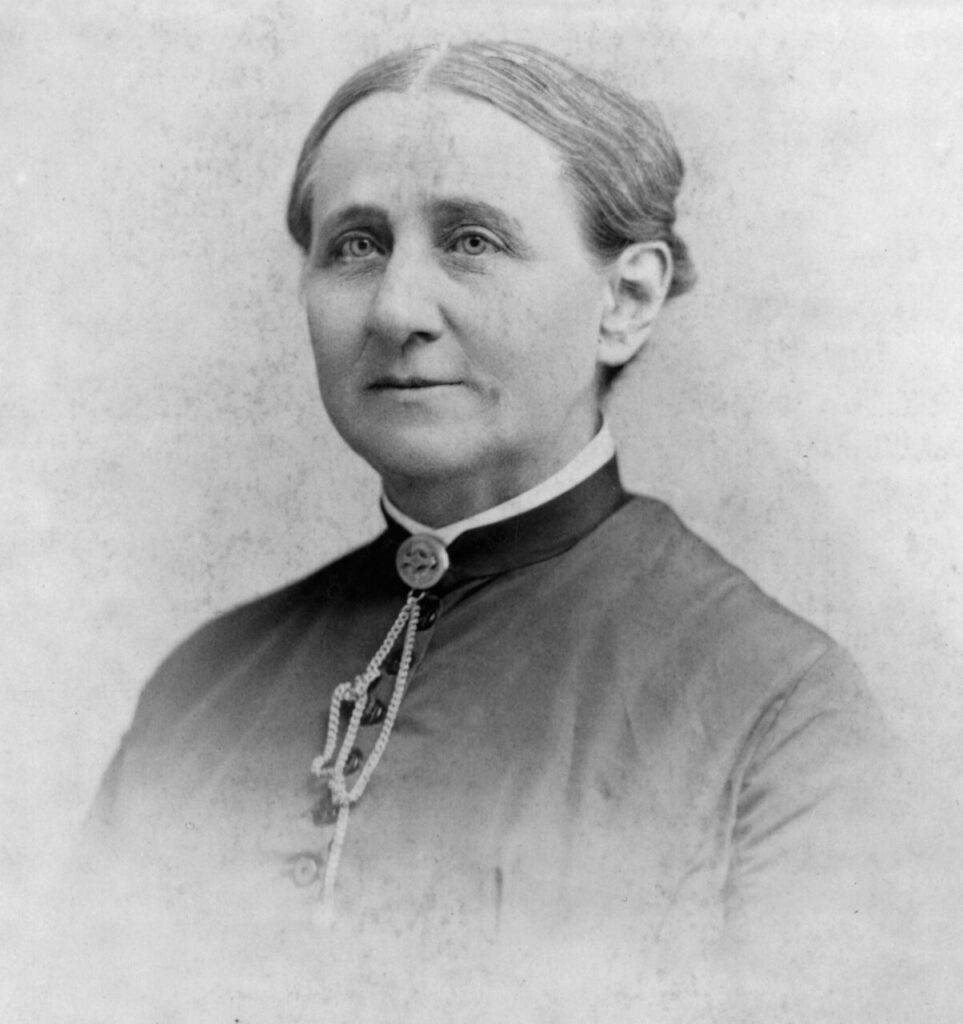
Antoinette Brown Blackwell lived through most of the nineteenth century and well into the twentieth. Born in Henrietta, New York, in 1825, she was the first woman in America to be ordained a minister in a major denomination. A skilled orator and commanding speaker, Blackwell spoke with passion on many of the key subjects of her era – linking faith and the Bible, particularly on subjects like women’s rights and the abolition of slavery.
Even the progressive Oberlin College in Ohio – one of only a few institutions that allowed Black students at the time – was non-receptive to a woman studying theology at the time. She lobbied the college for admission and broke the glass ceiling by becoming one of the first women in America to be enrolled for theological studies.
A prolific writer and a charismatic speaker, Blackwell was unstoppable and became a prominent voice during a time when women’s rights and the anti-slavery movement were hot button topics. Because she was not given a preacher’s license, Blackwell worked for Frederick Douglass’ abolitionist paper, The North Star, as a writer and seized every opportunity as a speaker.
Then, in 1852, the Congregational Church gave her a license to preach and the following year she was offered the position as minister at Congregational Church in Butler, New York.
Blackwell gave up much of her writing and her very active speaking engagements to follow her calling as a pastor and preacher. She was ordained by progressive Methodist minister Luther Lee, who was a vocal advocate for women’s right to theological training and church leadership. He spoke of her suitability as a preacher and her calling from God.
Rev. Antoinette Brown Blackwell later continued her ministry in New York City working on behalf of the poor as she continued to write and to speak on important issues. She wrote several books and articles, and founded a number of organizations including the Unitarian Society of Elizabeth. At the age of 95, she was the only surviving participant of the 1850 Women’s Rights Convention to see the passage of the Nineteenth Amendment to the Constitution giving women the right to vote in 1920. A year later, she died in Elizabeth, New Jersey, at the age of 96.
IDA BELL ROBINSON

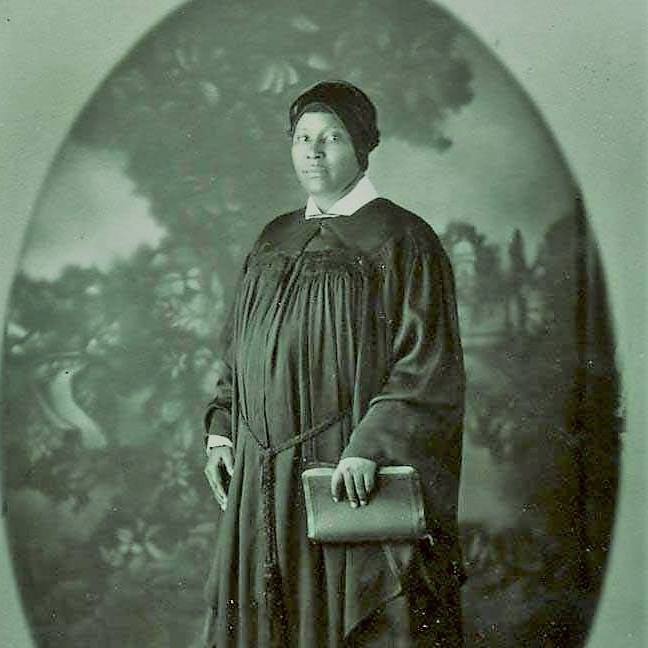
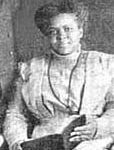
Bishop Ida Bell Robinson was an ecclesiastic pioneer well ahead of her time. She founded Mount Sinai Holy Church of America almost one hundred years ago, firm in her conviction that God had called her as an instrument to loosen godly women to serve on equal footing with men, having full clergy rights as their male counterparts. “Men and women in Christ must harmoniously serve together to win souls to the Kingdom of God,” Bishop Robinson contended.
Today, the denomination she founded has more than 80 congregations across the United States and around the world, including in India, Guyana, the Philippines and the Dominican Republic.
Robinson was born in Georgia, but spent her childhood in Pensacola, Florida. She accepted Christ during a street revival conducted by the Church of God during the rise of the Pentecostal Holiness movement, and never looked back.
After pastoring for a brief time, she responded to the call of God to establish Mount Sinai Holy Church of America, and the state of Pennsylvania issued her a charter in 1924. A gifted evangelist, preacher and singer, the organization grew rapidly, and the first annual convocation was held in the “City of Brotherly Love” in September of 1925. Bishop Robinson traveled the country preaching and teaching – working tirelessly for many years, and the organization became the largest Pentecostal organization founded by a woman.
On April 6, 1946, Robinson left Philadelphia with her ministry team to serve some of their churches in Florida. After stopping in Jacksonville, they journeyed to Winter Haven, where on April 20, Bishop Robinson became ill and died. At the time of her passing, the organization she founded already had 84 churches worldwide.
AMANDA BERRY SMITH

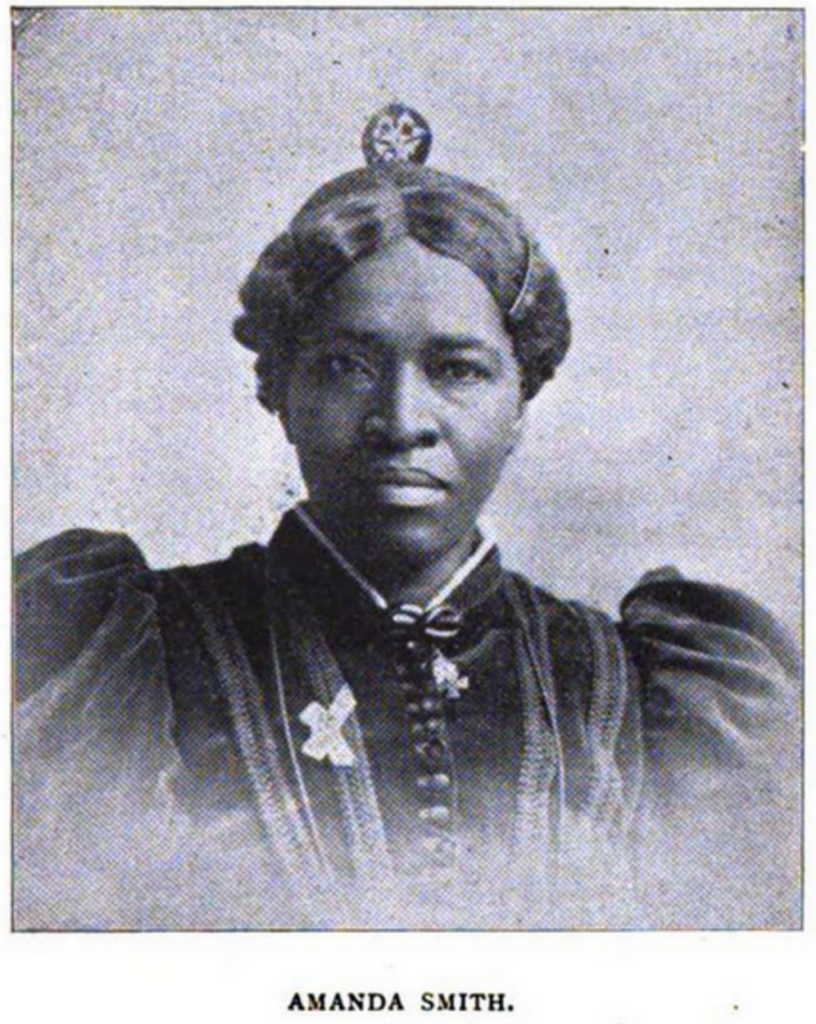
Affectionately referred to as “God’s image carved in ebony,” Amanda Berry Smith was born in slavery and after gaining her freedom, she rose to become a trailblazer of faith.
Born in Maryland in 1837 to Samuel Berry and his wife Marian, Amanda was one of 13 children and she and her sibling had the advantage of learning to read and write. Her father, who was well trusted by his master, made it a regular practice to read the bible to his family on Sunday mornings. When Mr. Berry’s master died, his master’s widow put him in charge of her farm. Mr. Berry would complete his duties and was allowed to work odd jobs to earn extra money to take care of his family. Many nights he would go without rest to earn extra income – on his mission to buy the freedom of himself and his family.
As a young teen, a freed Amanda went to work as a servant girl in York, Pennsylvania. While there, she attended revival meetings at the Methodist Episcopal Church. She would soon get married and begin a family, and later worked as a cook and a dishwasher. However, Amanda Berry Smith encountered great misfortune. Her husband was killed in the American Civil War and by age thirty-three, Smith lost four of her five children, and two husbands.
Church revival meetings and her active engagement in the African Methodist Episcopal (AME) church was her source of strength that helped her through her grief, and she anchored her life in prayer. Her struggles and hardships became the gateway for her ministry and global impact. Gifted in voice and an inspirational teacher, Smith began to work in the southern United States and along the west coast as an evangelist. She became a travelling preacher ministering to large and small audiences.
In 1878, she traveled to England and took her daughter there to study. On the journey, the captain invited her to conduct religious services on board the ship. The passengers were delighted and spread the news of her impact. Known as “the colored evangelist,” she continued her work in India and Africa, and upon her return she was invited as the first African American woman to preach at the Lafayette Avenue Presbyterian Church in Brooklyn, which was then the largest Presbyterian Church in America.
She founded the Amanda Smith Orphanage as well as the Industrial Home for Abandoned and Destitute Colored Children.