




CHRISTIANITY: The Other Political Party: The Hijacking of a Faith
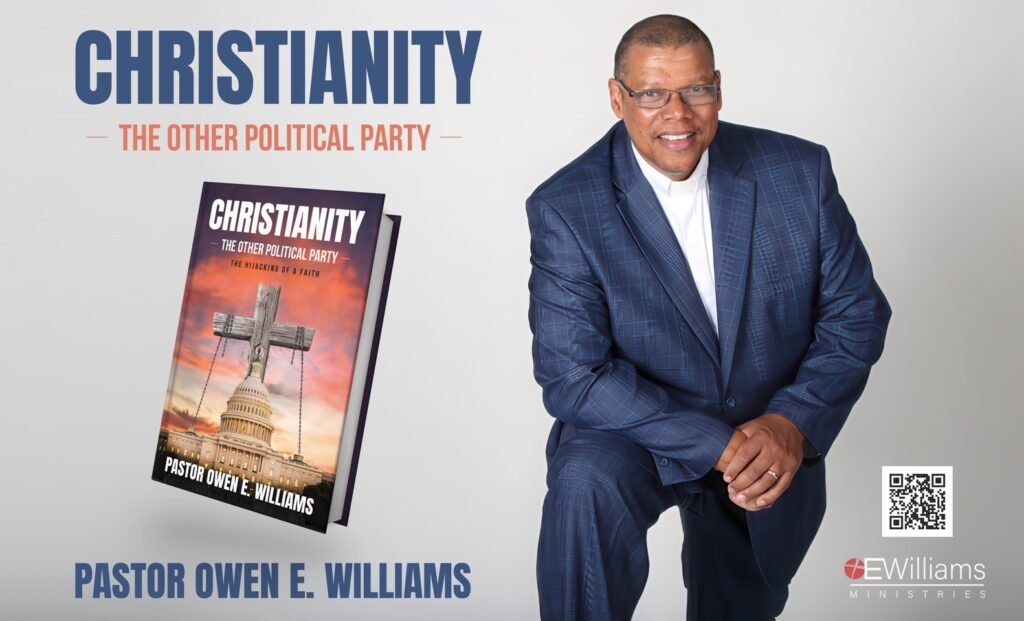
Rev. Owen E. Williams’s latest book, Christianity: The Other Political Party: The Hijacking of a Faith, audaciously confronts the entwined relationship between politics and faith in contemporary society. As pastor of the St. Mark Missionary Baptist Church in Jamaica, New York, and former president of The Queens Federation of Churches, Williams draws from his extensive experience to deliver a powerful critique that challenges readers to confront uncomfortable truths about the state of Christianity in America.
This fifth installment in Williams’ literary repertoire is not merely a commentary on politics; it’s a call to arms for believers who have watched with dismay as their faith has been co-opted by expedient political narratives. The author argues vehemently that both major political parties have distorted core Biblical principles, trading genuine spirituality for a gospel rife with selfishness, ambition, and an insatiable thirst for power.
Williams does not shy away from the contentious realities of political allegiance. He lays bare the hypocrisy within the Republican Party, accusing it of perpetuating Christian nationalist ideologies that promote entitlement and privilege. This, he asserts, has resulted in a dangerous exclusion of marginalized populations – particularly those who are poor and predominantly Black and Brown – through draconian fiscal policies and an aggressive protectionist stance. Conversely, he does not spare the Democratic Party from scrutiny; he characterizes its approach as recklessly irresponsible, undermining crucial values of citizenship and responsibility.
At the heart of Williams’s discourse is a profound concern for the identity crisis within the church itself. He articulates a grim reality where partisanship has taken precedence over divine allegiance, leading to a rise in sectarianism that has tainted the message of Christ. In this tug-of-war, he poignantly asks whether the synoptic gospels can accommodate such divergent ideologies, challenging his readers to reflect deeply on the example set by Jesus.
One of the book’s most compelling arguments is the proposition of a third-way theology. Williams reclaims Christianity as a faith rooted in relationships defined by love, justice, and mercy rather than political identities. This approach encourages readers to consider a relationship with Christ that transcends the divisive polarities of modern politics. He urges believers to focus on “What Would Jesus Do?” (WWJD) as a guiding principle, advocating for a spiritual reawakening that prioritizes faith over party lines.
Ultimately, Christianity: The Other Political Party is less about selecting a political side and more about reclaiming the true essence of faith from the clutches of partisan interests. Williams’s work serves as a crucial reminder that the church must disengage from its idolatrous attachment to aggressive political identities, or risk losing its moral compass entirely. This book is an essential read for anyone grappling with faith in the modern political landscape, providing not only a critique but also a pathway toward a more authentic and loving expression of Christianity.
As Williams boldly asserts, it is time for believers to take a hard look in the mirror and align their values with the teachings of Christ rather than fitting them into the narrow confines of partisan agendas.
For more information, visit oewilliamsministries.com.